Websites
Show, don’t tell: why your service business website needs to show your work
Your work is your best salesperson. Here’s how a service business website can show it off, stand out from competitors and turn visitors into enquiries.
Contents
If you run a service business, your work is the best thing you have to sell. A car transformed by a full wrap, a kitchen that changed how a family uses their home, an extension that finally gave them the space they needed. Yet most service business websites hide that work behind stock photos and a paragraph that says “quality service at competitive prices”.
Your customers can’t touch your work before they buy. Your website is where they decide whether to trust you. So it needs to do one job above all: show what you do, and make it impossible to confuse you with anyone else.
People judge your business by your website, fast
Research from Stanford’s Web Credibility Project found that people quickly judge a website’s credibility from its visual design alone: its layout, typography, images and consistency.1 Before anyone reads a word about your experience, they’ve already formed an opinion.
That works in your favour if your site looks as good as your work. If it looks dated or generic, it quietly undoes everything your reviews and reputation built.
Show the difference you make
Nothing explains a service business faster than a before and after. Drag the line below to see what we mean, and switch between trades.

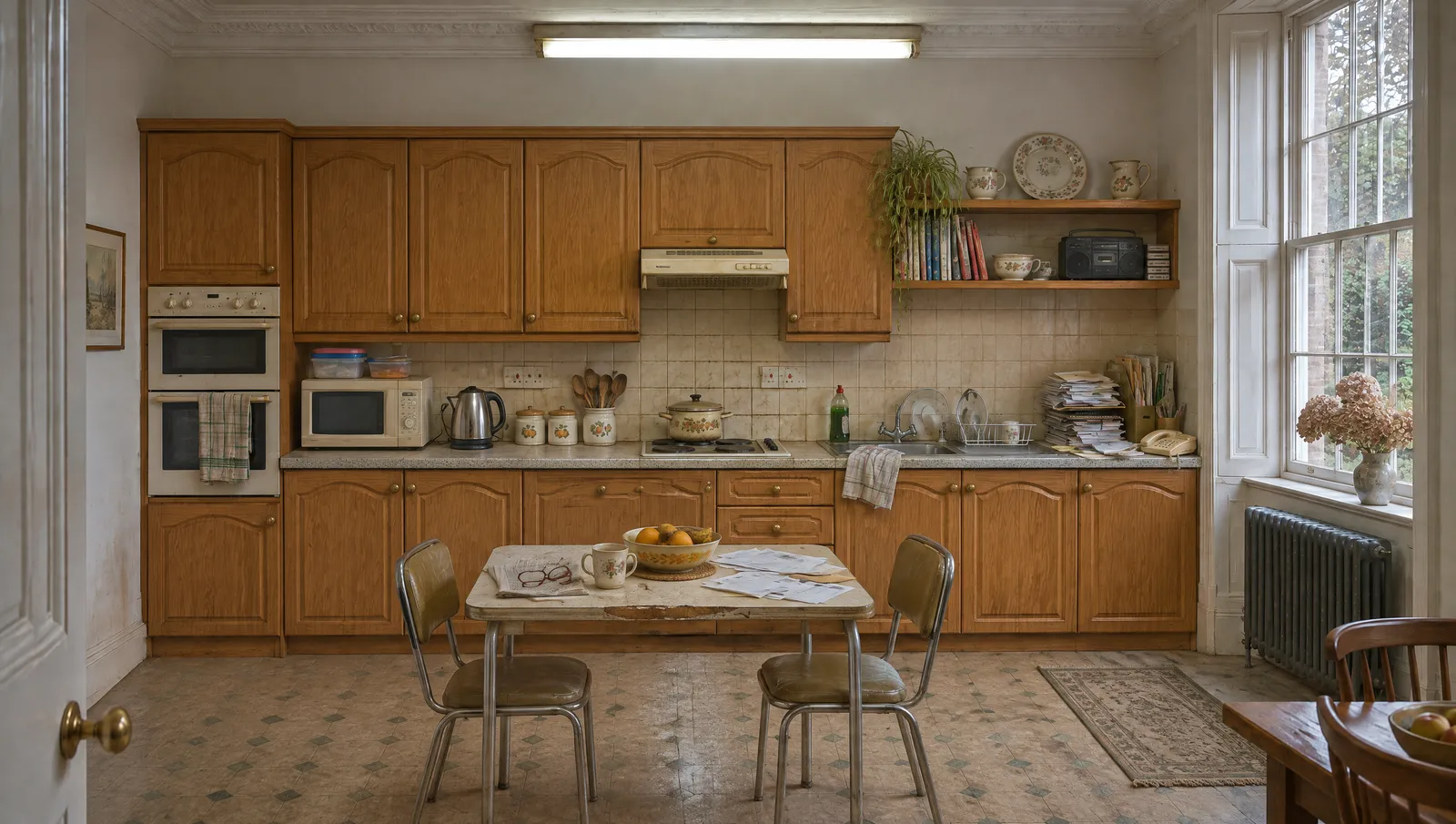
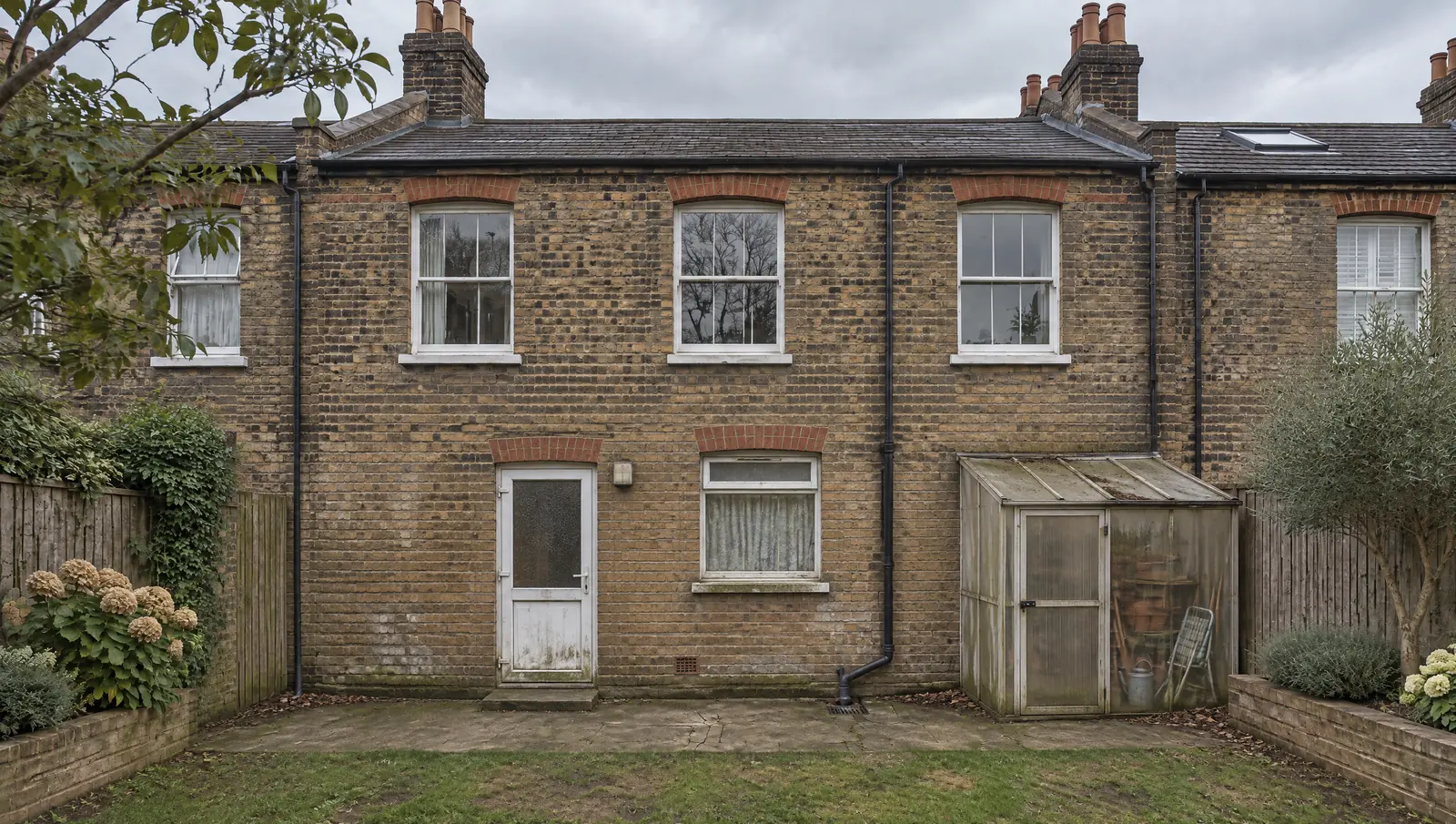



A comparison like this does in two seconds what a page of text can’t. The customer sees the problem they have now, and the result they want. It also does something subtler: it puts your work in front of them, not a stock photo that could belong to any competitor.
A few things make it work:
- Use your own photos. Real jobs, shot from the same angle before and after, in good light. It’s worth a few minutes on every job.
- Lead with your best work. Put your strongest transformations first, where people actually look.
- Keep it honest. Don’t retouch the “after”. If you’re in a regulated trade like dentistry, the rules are strict: UK advertising guidance says before-and-after photos must be genuine and representative, and practices must hold signed, dated proof and the patient’s permission.2
Set yourself apart from everyone else in your area
Search for any trade in your town and you’ll find the same website again and again: a banner photo, three boxes of services, a contact form. When every option looks the same, customers choose on price.
A website that’s clearly yours changes that. That means:
- Your story, not a template. Who you are, why you started, what you won’t compromise on.
- The specifics only you can claim. The brands you’re approved to fit, the materials you use, the warranty you give, your real Google rating.
- A look that matches the quality of your work. If you charge premium prices, your website has to feel premium too.
Make it easy to take the next step
A beautiful site that doesn’t bring in enquiries is just a brochure. The sites that turn visitors into customers usually get a handful of things right:
- One clear action on every screen. “Book a free quote”, “Check availability”, “Call now”. Not five competing buttons.
- Online booking or a short enquiry form. Fewer fields means more people finish it. Ask only what you need to reply.
- Speed, especially on phones. A study by Deloitte, commissioned by Google, found that even a 0.1 second improvement in mobile site speed was linked to better results. Bounce rates on lead generation sites’ information pages improved by 8.3%.3
- Proof next to the decision. Reviews and before-and-afters placed right beside the booking button, where doubt kicks in.
- Every enquiry reaching you instantly, so you can reply while they’re still interested.
Measure what matters
You can’t improve what you don’t track. At a minimum, a service business website should tell you how many people visited, how many enquired or booked, and which pages they came from. That tells you whether the site is earning its keep, and where to improve it next.
The bottom line
Your website should work as hard as you do. Show the work, make it unmistakably yours, and make the next step obvious. Do those three things well, and your website stops being a cost and becomes your best salesperson.
Sources
-
Fogg, B.J. (2002). Stanford Guidelines for Web Credibility. Stanford Persuasive Technology Lab. https://credibility.stanford.edu/guidelines (opens in a new tab) ↩
-
Advertising Standards Authority, Dental: General (before and after photos must be genuine and representative, with signed and dated proof). https://www.asa.org.uk/advice-online/dental-general.html (opens in a new tab). See also the GDC’s Guidance on advertising: https://www.gdc-uk.org/standards-guidance/standards-and-guidance/gdc-guidance-for-dental-professionals/guidance-on-advertising (opens in a new tab) ↩
-
Deloitte and 55, commissioned by Google (2020). Milliseconds Make Millions. https://www.deloitte.com/ie/en/services/consulting/research/milliseconds-make-millions.html (opens in a new tab) ↩